


The Gondolier
Radiolab
06/26/26
•73m
About
Comments
Featured In
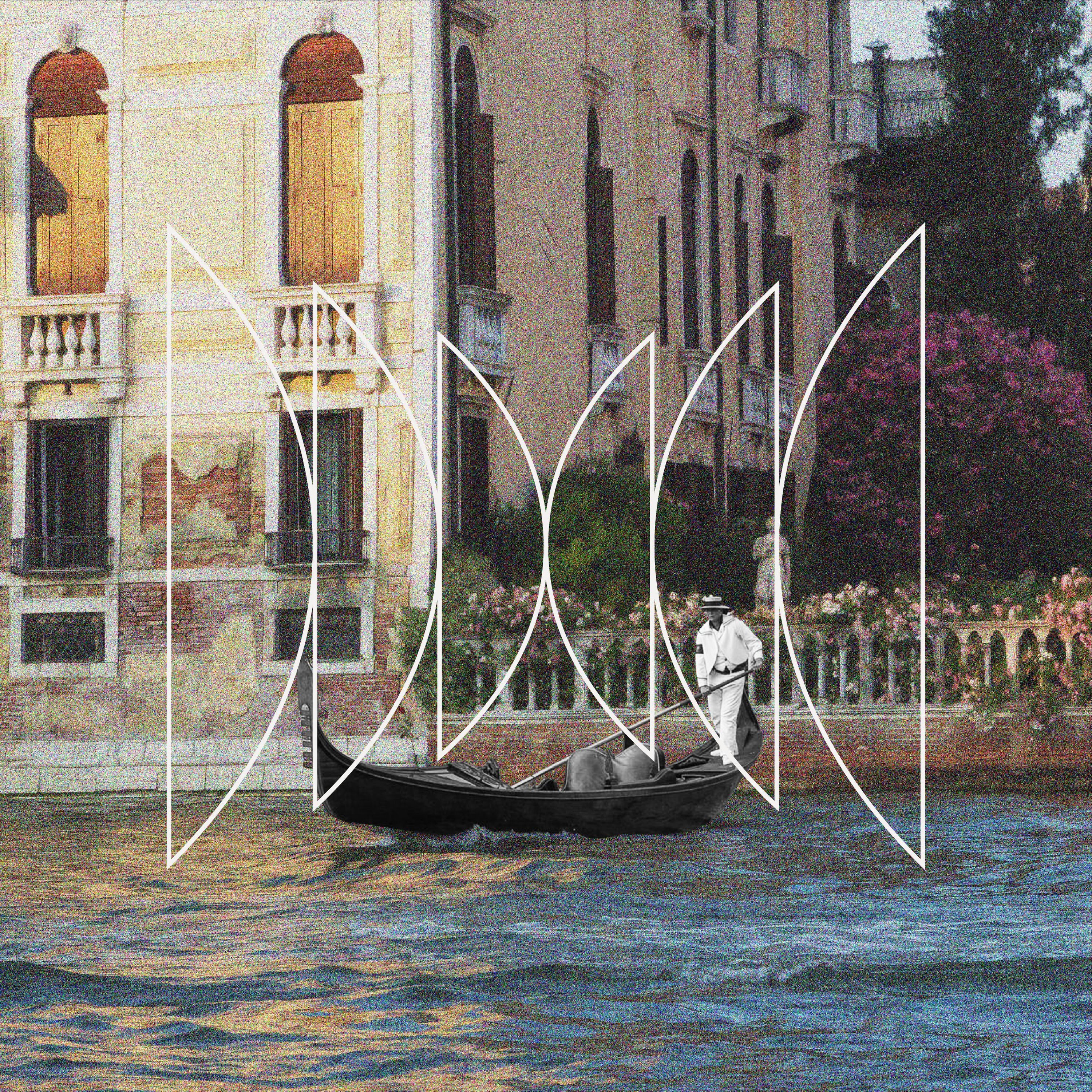
Back in 2017, reporters Kristen Clark and David Conrad came to us with a story that dug into the difficult and often dark places discrimination creates. We start in Venice, Italy, where they meet gondolier Alex Hai. On the winding canals in the hidden parts of Venice, we learn about the nearly 1000-year old tradition of the Venetian Gondolier, and how the global media created a 20-year battle between that tradition and a supposed feminist icon.
We circled back to Alex in 2026, to find out where the canal of life ended up leading after our initial reporting, and we’ve included some heartbreaking and heartwarming updates on Alex’s life at the end of this episode.
Special thanks to Alexis Ungerer, Summer, Alex Hai, Kevin Gotkin, Silvia Del Fabbro, Sandro Mariot, Aldo Rosso and Marta Vannucci, The Longest Shortest Time (Hillary Frank, Peter Clowney and Abigail Keel), Tim Howard, Nick Adams/GLAAD, Valentina Powers, Florence Ursino, Ann Marie Somma, Alex Overington, Jeremy Bloom and the people of Little Italy.
EPISODE CREDITS:
Reported by - David Conrad and Kristen Clark.
Produced by - Annie McEwen and Molly Webster.
with help from - Anisa Vietze
Fact-checking for the update by - Angely Mercado
OTHER COOL THINGS:
Books -
- The Gondolier, by Alex Hai
Signup for our newsletter!! It includes short essays, recommendations, and details about other ways to interact with the show. Sign up (https://radiolab.org/newsletter)!
Radiolab is supported by listeners like you. Support Radiolab by becoming a member of The Lab (https://members.radiolab.org/) today.
Follow our show on Instagram, Twitter and Facebook @radiolab, and share your thoughts with us by emailing radiolab@wnyc.org.
Hosted by Simplecast, an AdsWizz company. See pcm.adswizz.com for information about our collection and use of personal data for advertising.
Previous Episode
This is Your Brain on Hormones
June 19
•39m
After reading something that said her menstrual cycle changes her brain each month, Senior Correspondent Molly Webster goes on a reporting mission to see if that’s true, and, if so, how.
This journey into sex hormones and the brain involves females and males, and exacting self-experimentation. It gets into PTSD, and ends with a new twist on self-care (hint: it’s biological). And, it starts to reveal a sneaky truth: that each one of us is at the mercy of a crashing sea of chemicals inside of us – those things we call hormones.
Special thanks to Emily Jacobs, Laura Pritschet, Pavel Shapturenka, and Dr. Catherine Woolley.
EPISODE CREDITS:
Hosted by - Molly Webster
Reported by - Molly Webster
Produced by - Mona Madgavkar
with help from - Molly Webster
Fact-checking by - Diane A. Kelly
EPISODE CITATIONS:
Articles -
**The experiments we feature in this episode are called: 28andMe, 28andOC, and 28andHe, all of which took place at Emily Jacobs lab at the University of California, Santa Barbara.**
- The 28 Project (https://zpr.io/CSx6MnwZjRvp), background from the Jacobs lab
For more on how much variability there is between female and male animals, check out this “groundbreaking” study, referenced by Emily Jacobs in our episode
- Sex Bias in Neuroscience and Biomedical Research(https://zpr.io/ZRgKZzdNejUA), by Beery AK, Zucker I., Neurosci Biobehav Rev. 2011
Dr. Catherine Woolley has revolutionized the field of neuroscience and sex hormones, here’s more about her work ...
- Sex Differences in the Brain Get Down to the Molecular Level Sex (https://zpr.io/UNCLE9J782N5), by Stephanie DeMarco, PhD, The Scientist.com
- Hormonal Effects on the Brain (https://zpr.io/DvNM9EkXdtGG), by Woolley, C.S. and Schwartzkroin, P.A. Epilepsia
Data sets -
Audio -
In the episode, we mention Dr. Russ Poldrack and the Midnight Scan Club, as inspo for self-experimentation
- The Midnight Scan Club (https://zpr.io/CLBhNQSxK844), by Science Friday.
Signup for our newsletter!! It includes short essays, recommendations, and details about other ways to interact with the show. Sign up (https://radiolab.org/newsletter)!
Radiolab is supported by listeners like you. Support Radiolab by becoming a member of The Lab (https://members.radiolab.org/) today.
Follow our show on Instagram, Twitter and Facebook @radiolab, and share your thoughts with us by emailing radiolab@wnyc.org.
Leadership support for Radiolab’s science programming is provided by the Simons Foundation and the John Templeton Foundation. Foundational support for Radiolab was provided by the Alfred P. Sloan Foundation.
Hosted by Simplecast, an AdsWizz company. S...
Next Episode
Atomic Artifacts
July 3
•40m
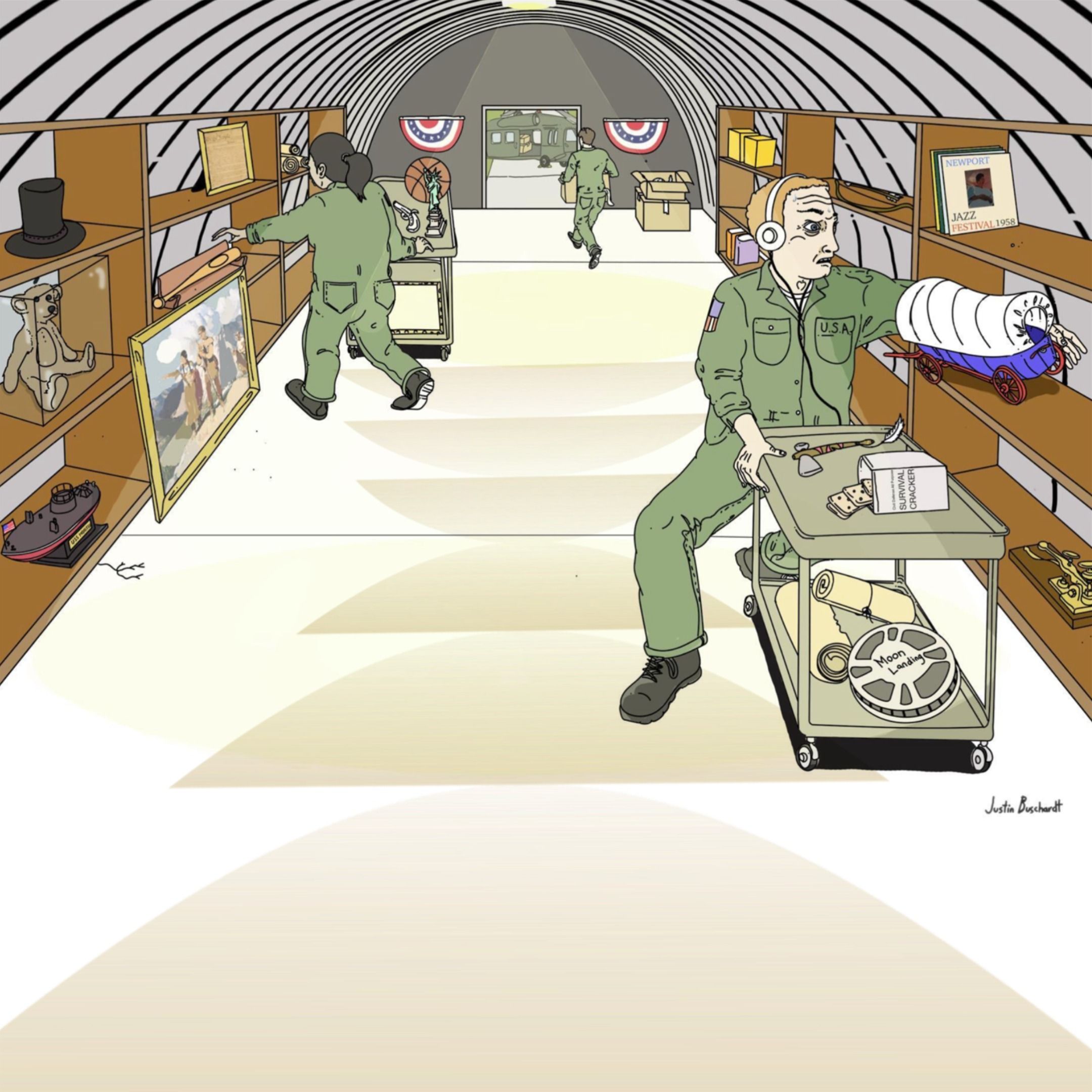
Back in the 1950s, facing the threat of nuclear annihilation, federal officials sat down and pondered what American life would actually look like after an atomic attack. They faced a slew of practical questions like: Who would count the dead and where would they build the refugee camps? But they faced a more spiritual question as well. If Washington DC were hit, every object in the the National Archives would be eviscerated in a moment. Terrified by this reality, they set out to save some of America’s most precious stuff. Today, we look back at the items our Cold War era planners sought to save and we ask the question: what objects would we preserve now?
We first released this episode back in 2020, but with our big fourth of July – 250 years! – just around the corner, we thought it was a strange but profound reflection on what this whole America thing that we’re celebrating... actually is.
Special thanks to Luke Manon, Ben Irving, Bill Pretzer, Jason Spier, and Garrett Graff for all his reporting that made this episode possible.
LATERAL CUTS -
The Cataclysm Sentence (https://radiolab.org/podcast/cataclysm-sentence)
EPISODE CREDITS:
Reported by - Simon Adler
with help from - Tad Davis
Produced by - Simon Adler
Original music and sound design contributed by - SIMON ADLER
and Edited by - Pat Walters
Signup for our newsletter!! It includes short essays, recommendations, and details about other ways to interact with the show. Sign up (https://radiolab.org/newsletter)!
Radiolab is supported by listeners like you. Support Radiolab by becoming a member of The Lab (https://members.radiolab.org/) today.
Follow our show on Instagram, Twitter and Facebook @radiolab, and share your thoughts with us by emailing radiolab@wnyc.org.
Leadership support for Radiolab’s science programming is provided by the Simons Foundation and the John Templeton Foundation. Foundational support for Radiolab was provided by the Alfred P. Sloan Foundation.
Hosted by Simplecast, an AdsWizz company. See pcm.adswizz.com for information about our collection and use of personal data for advertising.
If you like this episode you’ll love



Promoted