



Patient Zero
Radiolab
08/21/26
•51m
About
Comments
Featured In
The greatest mysteries have a shadowy figure at the center—someone who sets things in motion and holds the key to how the story unfolds. In epidemiology, this central character is known as Patient Zero—the case at the heart of an outbreak. This hour, Radiolab digs up an episode we first produced in 2011 and hunts for Patient Zeroes from all over the map. We start with the story of perhaps the most iconic Patient Zero of all time: Typhoid Mary. Then, we dive into a molecular detective story to pinpoint the beginning of the AIDS, and we re-imagine the moment the virus that caused the global pandemic sprang to life. After that, we're left wondering if you can trace the spread of an idea the way you can trace the spread of a disease. In the end, we find ourselves faced with a choice between competing claims about the origin of the high five.
Signup for our newsletter!! It includes short essays, recommendations, and details about other ways to interact with the show. Sign up (https://radiolab.org/newsletter)!
Radiolab is supported by listeners like you. Support Radiolab by becoming a member of The Lab (https://members.radiolab.org/) today.
Follow our show on Instagram, Twitter and Facebook @radiolab, and share your thoughts with us by emailing radiolab@wnyc.org.
Leadership support for Radiolab’s science programming is provided by the Simons Foundation and the John Templeton Foundation. Foundational support for Radiolab was provided by the Alfred P. Sloan Foundation.
Hosted by Simplecast, an AdsWizz company. See pcm.adswizz.com for information about our collection and use of personal data for advertising.
Previous Episode
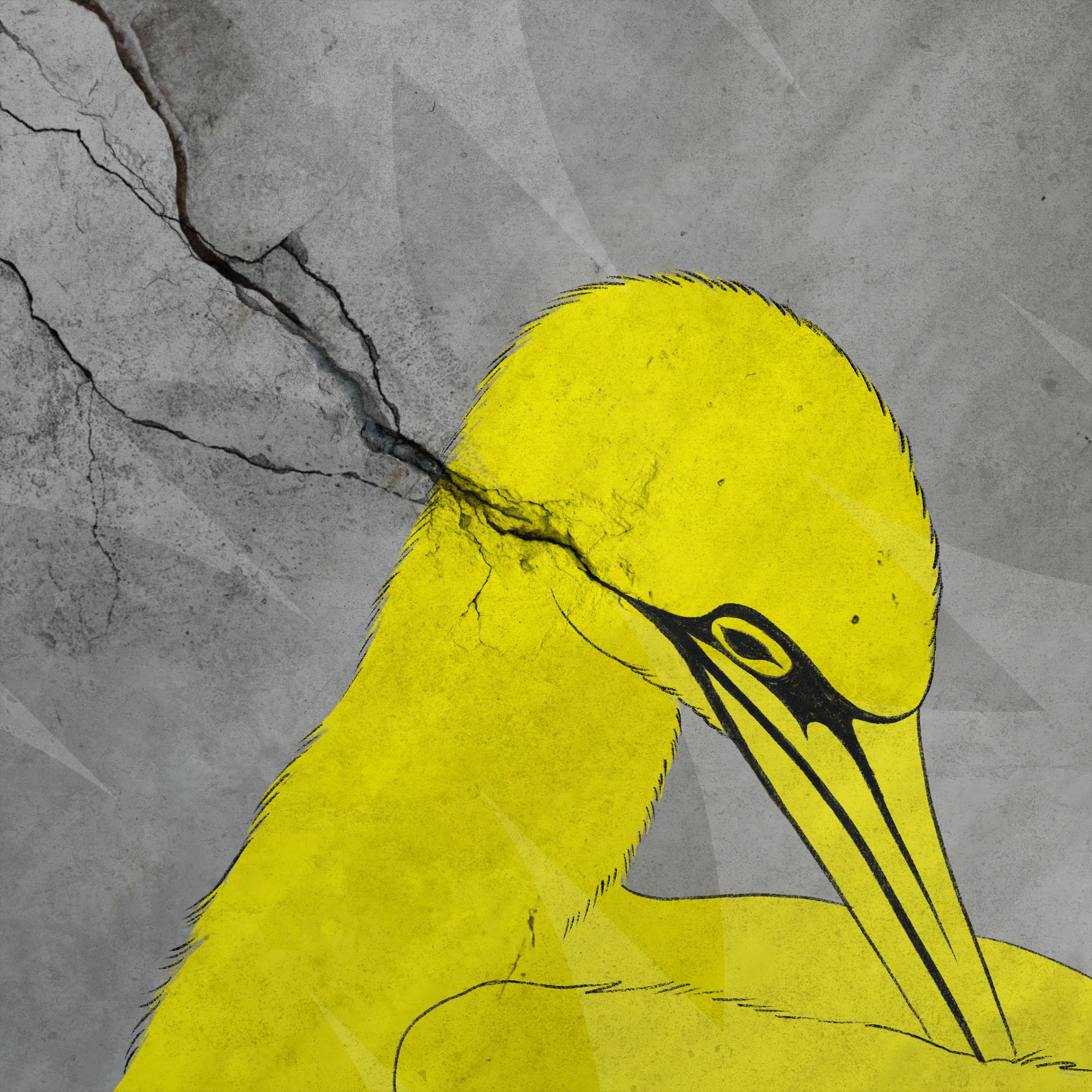
Nigel and the Real Gannet
August 14
•25m
In 2016, Chris Bell, a ranger with New Zealand’s Department of Conservation, was the sole human inhabitant of a small island off the west coast of the country, called Mana Island. He was there to take care of the island’s fragile and recovering ecosystem, including a colony of Australasian Gannets at the top of a high cliff overlooking the sea. But there was one catch. All but one of these striking seabirds were fake, made of concrete and paint.
This week on Radiolab, producer Annie McEwen tells us a love story about a rogue bird and what happens when the things we want for animals clash with what they seem to choose for themselves.
Special thanks to Melody Thomas and Kirsten Johnstone from Popsock Media, the New Zealand-based podcast company. Thanks also to Mathias Kom and Ariel Sharratt from The Burning Hell and Steven Lambke at You’ve Changed Records.
Visit Friends of Mana Island at https://manaisland.org.nz/ to learn more about conservation efforts on Mana Island.
EPISODE CREDITS:
Reported by - Annie McEwen
Produced by - Annie McEwen
with mixing help from - Jeremy Bloom
Fact-checking by - Diane A. Kelly
and Edited by - Alex Neason
EPISODE CITATIONS:
Videos -
There are many Nigel-inspired songs, poems, and plays find links to a few of them below:
- See Nigel with his concrete mate (https://zpr.io/kZZC9erwauCD)
- Nigel the Gannet song video by The Burning Hell (theburninghell.com)
- Nigel [w/ score] (https://zpr.io/t47J6VkqAXLj) by Angus Davison
- Nigel the Lonely Seabird (https://zpr.io/4gSSv5MX8xTa) by Daniel Henderson
- Nigel (https://zpr.io/FuLupaZG42sn) by Avem
- Nigel No Mates (https://zpr.io/hckrSSdBXKE9 ) by Dainius Kučinskas
- Nigel Gannet (https://zpr.io/kddxySdXqd3C) by Fred Pilcher
- Nigel (https://zpr.io/88HdTWRSd2UF) an Experimental Animated Short Film About a Lonely Gannet
- Nigel, the Seabird, (https://vimeo.com/1023401693) by Chloé Aktaş, debuted at The Elysian Theater in Los Angeles in 2025
Literature -
Sign up for our newsletter!! It includes short essays, recommendations, and details about other ways to interact with the show. Signup (https://radiolab.org/newsletter)!
Radiolab is supported by listeners like you. Support Radiolab by becoming a member of The Lab (https://members.radiolab.org/) today.
Next Episode

Dolly Parton's America: Sad Ass Songs
August 28
•64m
The world lost a legend recently, and we wanted in some small way to pay tribute to the great Dolly Parton. So we’re playing you an episode from a series we had a small part in back in 2017, Dolly Parton’s America.
The series kicked off with a simple question: How did the queen of the boob joke become a feminist icon? Helen Morales, author of “Pilgrimage to Dollywood,” gave us a stern directive – look at the lyrics! So we dive into Dolly’s discography, starting with the early period of what Dolly calls “sad ass songs” to find remarkably prescient words of female pain, slut-shaming, domestic violence, and women being locked away in asylums by cheating husbands. We explore how Dolly took the centuries-old tradition of the Appalachian “murder ballad”—an oral tradition of men singing songs about brutally killing women—and flipped the script, singing from the woman’s point of view. And as her career progresses, the songs expand beyond the pain to tell tales of leaving abuse behind.
How can such pro-woman lyrics come from someone who despises the word feminism? Best to let Dolly tell you herself.
EPISODE CREDITS:
Reported by - Jad Abumrad and Shima Oliaee
Produced by - Jad Abumrad
with help from - W. Harry Fortuna
Original music from - Alex Overington
Sound design contributed by - Alex Overington
and Edited by - Suzie Lechtenberg
Signup for our newsletter!! It includes short essays, recommendations, and details about other ways to interact with the show. Sign up (https://radiolab.org/newsletter)!
Radiolab is supported by listeners like you. Support Radiolab by becoming a member of The Lab (https://members.radiolab.org/) today.
Follow our show on Instagram, Twitter and Facebook @radiolab, and share your thoughts with us by emailing radiolab@wnyc.org.
Leadership support for Radiolab’s science programming is provided by the Simons Foundation and the John Templeton Foundation. Foundational support for Radiolab was provided by the Alfred P. Sloan Foundation.
Hosted by Simplecast, an AdsWizz company. See pcm.adswizz.com for information about our collection and use of personal data for advertising.
If you like this episode you’ll love


Promoted