


Neither Confirm Nor Deny
Radiolab
07/17/26
•29m
About
Comments
Featured In
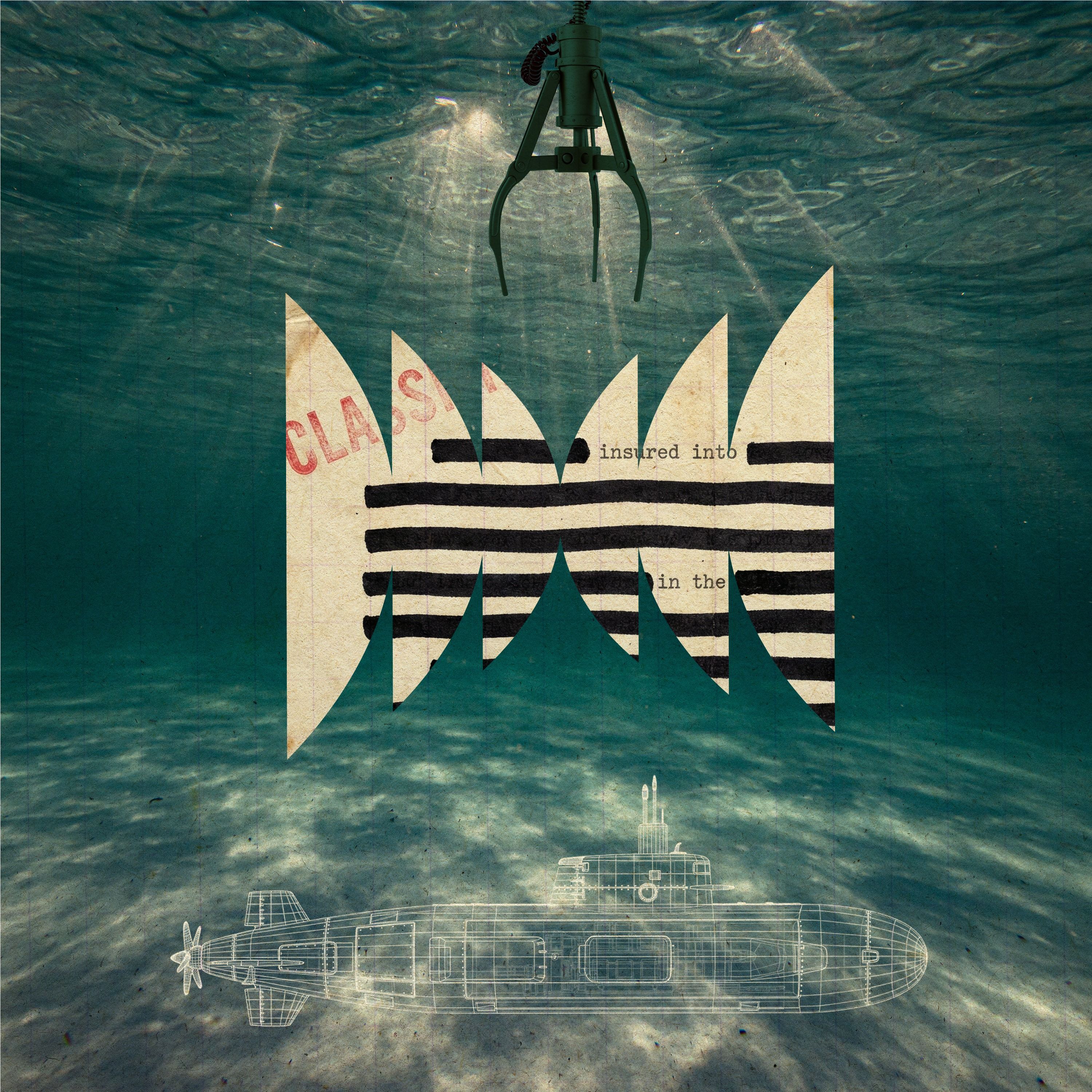
In an episode we first ran back in 2014, we explore how a sunken nuclear submarine, a crazy billionaire, and a mechanical claw gave birth to a phrase that has hounded journalists and lawyers for 40 years and embodies the tension between the public’s desire for transparency and the government’s need to keep secrets.
Whether it comes from government spokespeople or celebrity publicists, the phrase “can neither confirm nor deny” is the perfect non-denial denial. It’s such a perfect deflection that it seems like it’s been around forever, but reporter Julia Barton takes us back to the 1970s and the surprising origin story of what’s now known as a “Glomar Response.” With help from David Sharp and Walt Logan, we tell the story of a clandestine CIA operation to lift a sunken Soviet submarine from the ocean floor and the dilemma they faced when the world found out about it. It’s an episode we first released in 2014, but given some things in the news recently, it resonated with us again.
In the 40 years since that operation, the Glomar Response has become boilerplate language from an array of government agencies. With help from ProPublica editor Jeff Larson and NPR’s Dina Temple-Raston, we explore the implications of this ultimate information dodge. ACLU lawyer Jameel Jaffer explains how it stymies oversight, and we learn that, even 40 years later, governmental secrecy can be emotionally painful.
More information about Glomar:
After 40 years, many of the details of Project Azorian are only now coming to light. The US government’s default position has been to keep as much of it classified as possible. It took three years for retired CIA employee David Sharp to get permission to publish his account of Project Azorian. And FOIA played an indirect role in that, as Cold War historians got the CIA to release, in redacted form, an internal history of the mission. After that and a threat of legal action, Sharp was finally able to publish his manuscript in 2012.
We mentioned conspiracy theories that have swirled around Project Azorian filling the void where official silence has reigned. One of them is promulgated in the 2005 book “Red Star Rogue” by Kenneth Sewell and Clint Richmond. They posit that the K-129 was taken over by rogue Stalinist KGB agents in order to start a nuclear conflict. But the conflict was to be between the US and China, as, according to the authors, the sub had powers to disguise its sonic signature as a Chinese Navy vessel.
This book is the basis of the 2013 drama “Phantom,” which features Ed Harris and David Duchovny as Soviet military officers who sip vodka in a very un-Russian way.
Russian Naval historians, like Nikolai Cherkashin, are not only insulted by this take on the cause of the K-129’s demise, they say the true cause is much easier to pinpoint: They say an American vessel, possibly the USS Swordfish, collided with the Soviet submarine.
Despite the fact that the US government has turned over many documents about Project Azorian and what it found to the Russian government, many in the Russian Navy stand by their theory that it was far too easy for the US to locate the K-129 on the bottom of the Pacific, given the technology of the time. According to these theories, Project Azorian was nothing more than an elaborate cover-up disguised as ... an elaborate cover-up. We can neither confirm nor deny that we exactly understand how that would have worked in practice or execution.
It’s one of the more solemn moments of the Cold War, and one that the Glomar Response helped keep a secret for a very long time.
LATERAL CUTS:
What Lies Beneath (https://radiolab.org/podcast/what-lies-beneath)
EPISODE CREDITS:
Reported by - Julia Barton
Sign up for our newsletter!! It includes short essays, recommendations, and details about other ways to interact with the show. Signup (https://radiolab.org/newsletter)!
Radiolab is supported by listeners like you. Support Radiolab by becoming a member of July 10 37m Lauren Brown gets goosebumps. A lot. Sometimes several times a day. When her partner, writer Carmen Maria Machado, noticed it...she couldn't stop thinking about it. Why does she get them in so many different situations? What’s happening in her body and what does it mean? We take that question and run with it. We face chilly winds, sudden frights, and moments when the world seem to shift under your feet to figure out what the little bumps on our skin might be trying to tell us. Special thanks to Rachel Gross, Gregory Rupik EPISODE CITATIONS: Website - Software - Videos - Books - Sign up for our newsletter!! It includes short essays, recommendations, and details about other ways to interact with the show. Signup (https://radiolab.org/newsletter)! Radiolab is supported by listeners like you. Support Radiolab by becoming a member of The Lab (https://members.radiolab.org/) today. Follow our show on Instagram, Twitter and Facebook @radiolab, and share your thoughts with us by emailing radiolab@wnyc.org. Leadership support for Radiolab’s science programming is provided by the Simons Foundation and the John Templeton Foundation. Foundational support for Radiolab was provided by the Alfred P. Sloan Foundation. Hosted by Simplecast, an AdsWizz company. See pcm.adswizz.com for information about our collection and use of personal data for advertising. July 24 55m Several years ago, in 2016, we told a story about Amy Pearl. For as long as she could remember, Amy loved meat in all its glorious cuts and marbled flavors. And then one day, for seemingly no reason, her body wouldn’t tolerate it. No steaks. No brisket. No weenies. It made no sense: why couldn’t she eat something that she had routinely enjoyed for decades? It turned out Amy was not alone. And the answer to her mysterious allergy involved maps, a dancing lone star tick, and a very particular sugar called Alpha Gal. In this update, we discover that our troubles with Alpha Gal go way beyond food. We go to NYU Langone Health hospital to see the second ever transplant of a kidney from a pig into a human, talk to some people at Revivicor, the company that bred the pig in question, and go back to Amy to find out what she thinks about this brave new world. The original episode was reported by Latif Nasser, and produced by Annie McEwen and Matt Kielty. Sound design and scoring from Dylan Keefe, Annie McEwen, and Matt Kielty. Mix by Dylan Keefe with Arianne Wack. The update was reported and produced by Sarah Qari. It was sound designed, scored, and mixed by Jeremy Bloom. LATERAL CUTS: Support Radiolab by becoming a member today at Radiolab.org/donate. Sign up for our newsletter!! It includes short essays, recommendations, and details about other ways to interact with the show. Signup (https://radiolab.org/newsletter)! Radiolab is supported by listeners like you. Support Radiolab by becoming a member of The Lab (https://members.radiolab.org/) today. Follow our show on Instagram, Twitter and Facebook @radiolab, and share your thoughts with us by emailing radiolab@wnyc.org. Hosted by Simplecast, an AdsWizz company. See pcm.adswizz.com for information about our collection and use of personal data for advertising.Previous Episode

The Holy Shiver
EPISODE CREDITS:
Reported by Maria Paz Gutierrez
Produced by Maria Paz Gutierrez, Sindhu Gnanasambandan
Fact-checking by Angely Mercado
Next Episode
Return of Alpha Gal
Leadership support for Radiolab’s science programming is provided by the Simons Foundation and the John Templeton Foundation. Foundational support for Radiolab was provided by the Alfred P. Sloan Foundation.
If you like this episode you’ll love





Promoted